
Running a Sex Offender Check in Greene County
The Alabama Law Enforcement Agency, or ALEA, runs the statewide public registry through its Criminal Justice Information Services Sex Offender Registry Unit. Greene County law enforcement registers qualifying people locally and forwards the required information, photograph, and fingerprints. ALEA says the public site updates daily in real time from local submissions. That timing still depends on accurate local reporting and processing.
Use the ALEA gateway for an Alabama-focused Greene County search. Use the U.S. Department of Justice National Sex Offender Public Website, or NSOPW, when the location question crosses state or tribal lines. For a suspected wrong Greene County address or compliance issue, contact the registering law-enforcement agency. The registry's state unit handles questions about the statewide site, while the conviction court holds the case file.
Greene County ALEA Registry Gateway
The official ALEA registry gateway explains coverage, update practices, exclusions, and the route to the live community search.
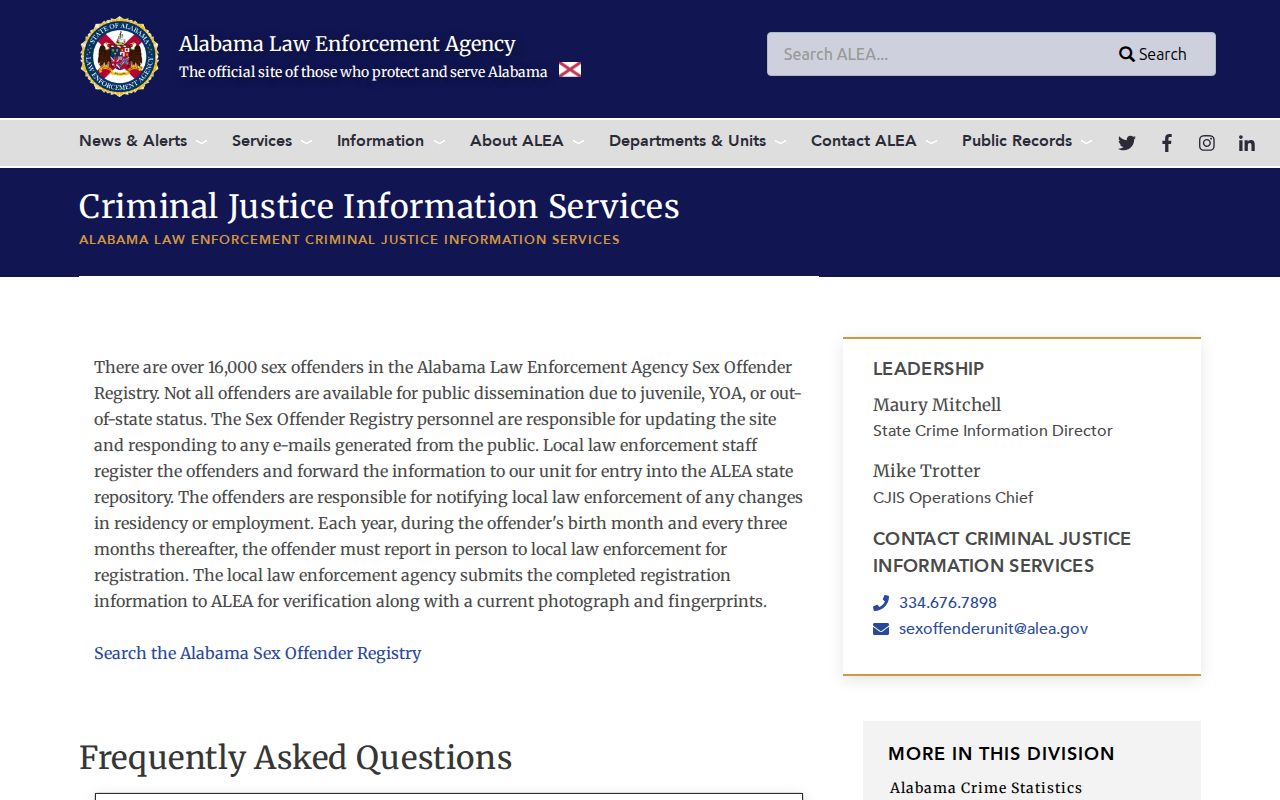
This gateway should be the starting point for current Alabama instructions because the search interface and notice options can change. ALEA also groups registry access with its other official online services. The gateway explains why not every sex-crime adjudication appears publicly. Certain juvenile cases, some Youthful Offender matters, out-of-state due-process situations, and offenses outside the controlling statutory list may be excluded. A first conviction for Indecent Exposure or Sexual Misconduct is specifically described by ALEA as non-posted.
Searching the Alabama Law Enforcement Agency Sex Offender Registry
The official community interface supports name and geographic searching. A Greene County filter is useful for a county-wide view, while city, ZIP, address, area, and map options can narrow a place-based check. Dynamic labels can change, so read the current instructions before entering data. Verify the date and status on each result rather than relying on a saved list.
- Open the ALEA gateway and continue to the official community-information search after reading its terms and notices.
- Choose a name search or a geographic mode, then select Greene County or enter the relevant city, ZIP, address, or area.
- Review map or list results carefully. Match identifiers from the public profile and do not rely on a name alone.
- Open the profile, check registration and compliance details, and use official contact channels for a suspected error.
| Field Label | Type | Required | Notes |
|---|---|---|---|
| Offender name | Text | No | Use known legal name details and compare aliases on a profile. |
| City or ZIP | Text or selection | No | Narrows an Alabama place search. |
| County | Selection | No | Select Greene for the county-wide result set. |
| Address or geographic area | Text or map | No | Supports location-based map or list results where offered. |
| Search or Reset | Button | Action | Runs the chosen mode or clears current criteria. |
The official ALEA community search is the live interface for these fields.
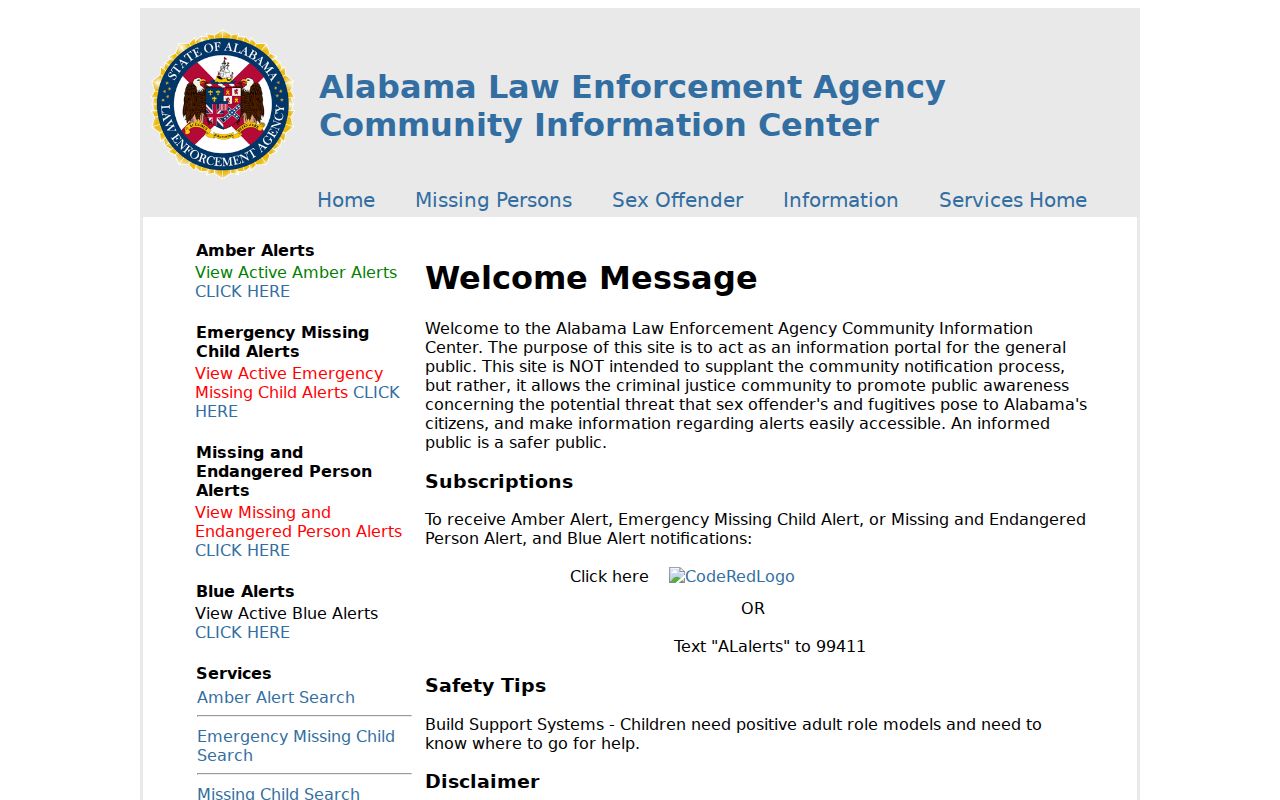
The neutral search view avoids preserving private individuals while showing where a Greene County filter and other search modes begin.
Greene County Registry Reporting Flow
A registry entry begins with local registration. The Greene County registering law-enforcement agency collects required data and sends it to ALEA. The state unit then publishes the lawful public subset. As a result, the phrase "daily in real time" describes the state site's processing from local submissions, not a guarantee that every change reached the local agency at the same moment it occurred.
Report a suspected stale address or possible noncompliance to local law enforcement. Do not attempt to edit the record, test an address through confrontation, or treat a map point as proof of present conduct. The ALEA Sex Offender Registry Unit can answer state-site questions at 334-676-7898 or sexoffenderunit@alea.gov. An immediate threat belongs with emergency services.
What a Registry Profile Shows
A Greene County registry profile is meant for public notification. ALEA decides which fields the law permits it to display. The record may help distinguish people with similar names and identify the registering agency, public address, qualifying offense, and registration status. It does not reproduce every motion, plea term, order, or sentence from the conviction case.
| Name & Aliases | Legal name and public aliases supplied through registration. |
|---|---|
| Photo & Physical Description | Current photograph and public descriptors such as height, weight, hair, eyes, and listed marks. |
| Registered Address | Public residence information and map location as displayed by ALEA. |
| Offense & Statute | Qualifying offense, statute, jurisdiction, and conviction information selected for public display. |
| Vehicles & Other Data | Vehicle and other notification fields when Alabama law requires public posting. |
| Registration Status | Registering agency, compliance or other public status, and relevant registration dates. |
Read the profile's status and date together. A Greene County address pin, photograph, or offense line without its current registration context can be misunderstood and should not be detached from the official record.
Greene County Registry vs Docket
A profile summarizes registration and notice information. It does not show the full criminal prosecution. The Alabama court file may contain the charge as filed, amendments, plea or verdict, judgment, sentence, appeal, and later orders. That distinction matters when a profile's offense label raises a question about the underlying case. Use Just One Look or the named court and clerk for the conviction file.
Likewise, absence from the public registry does not prove no sex-crime case ever existed. Alabama's posting universe is governed by Ala. Code § 15-20A-5 and related exclusions. Juvenile risk assessment, Youthful Offender status, out-of-state process, and the exact offense can affect public display. A Greene County sex offender check answers the notification question defined by current law, not every possible criminal-history question.
Registration Requirements and Levels in Alabama
Alabama does not present its public registry as a simple federal Tier I, Tier II, and Tier III table. Adult qualifying offenders generally face lifetime registration and community-notification duties, with limited statutory relief. Juvenile treatment depends on risk assessment and the statutory category. The state's registry-information rule supplies current agency detail. Importing the federal 15-year, 25-year, and lifetime tier model into a Greene County profile would misstate Alabama's system.
| Alabama category | Duration or effect | Verification |
|---|---|---|
| Adult qualifying offender | Generally lifetime duties, subject to current statutory relief provisions. | In person during the birth month and every three months thereafter. |
| Juvenile adjudication | Public treatment depends on risk assessment and statutory category. | Follow the specific order and current Alabama law. |
| Excluded or non-posted matter | Not part of ordinary public registry results under ALEA's stated exclusions. | Not shown as a public tier in the registry. |
The official acknowledgment states a $10 fee at each quarterly registration and when establishing a new residence, subject to current law. Address and other required changes must be reported, and the local agency forwards updates to ALEA. Knowing violations can be a Class C felony. Duration or relief should be checked against the current Ala. Code §§ 15-20A-1 et seq., not assumed from a label.
Greene County Registry vs NSOPW
ALEA is the direct Alabama source and offers the most useful state guidance for a Greene County search. NSOPW adds a national layer by querying participating state, territory, and tribal public registries. It is useful when someone recently moved, an address lies near a state line, or the correct jurisdiction is unclear. A national result still routes back to the contributing registry for its source details.
The official DOJ National Sex Offender Public Website provides the cross-state search layer.
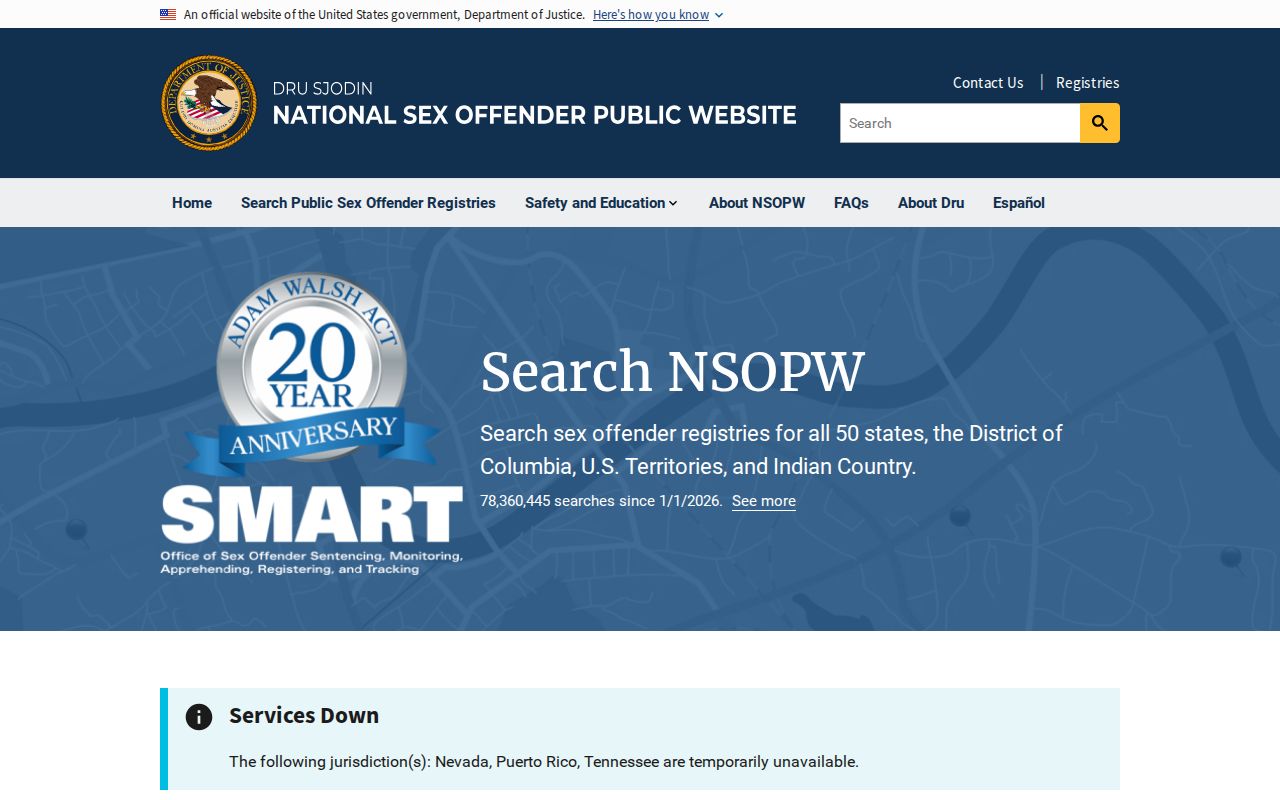
Compare any national match with ALEA's current profile and contact the appropriate registering agency if the two official views appear inconsistent.
Greene County Registry Location Rules
Alabama ASORCNA imposes several location and conduct restrictions, but the ALEA FAQ's reference to 500 feet in certain child-victim circumstances is not a complete statement of the law. The controlling facts can include the offense, victim category, location type, and specific statutory section. A map alone cannot determine whether a residence is lawful.
For a Greene County address concern, send the exact location and reason for concern to local law enforcement. Do not measure from a map and confront a resident. The agency can check the registration file and current legal requirements. Public users should also avoid treating a mapped address as a statement that a person is present at every moment or has committed new misconduct.
Lawful Use and Community Notification
Greene County registry information supports awareness and safety planning. It does not authorize trespass, surveillance, intimidation, or personal enforcement. Use official community notification or alert routes when offered, verify a profile through ALEA, and report a suspected registration problem to law enforcement. The public should not attempt to correct the address, investigate the household, or infer current criminal conduct from the profile.
Use registry data lawfully: Alabama's registry rules under Ala. Code §§ 15-20A-1 et seq. do not permit harassment, threats, intimidation, confrontation, trespass, or crimes against a registrant or household member. Report concerns to law enforcement.
The ALEA Sex Offender Registry Unit is available at 334-676-7898 and sexoffenderunit@alea.gov for questions about the state system. Greene County local compliance or address concerns go to the registering law-enforcement agency. For immediate danger, call emergency services rather than relying on a registry update or notification message.